
Best Supply Chain Software in 2026
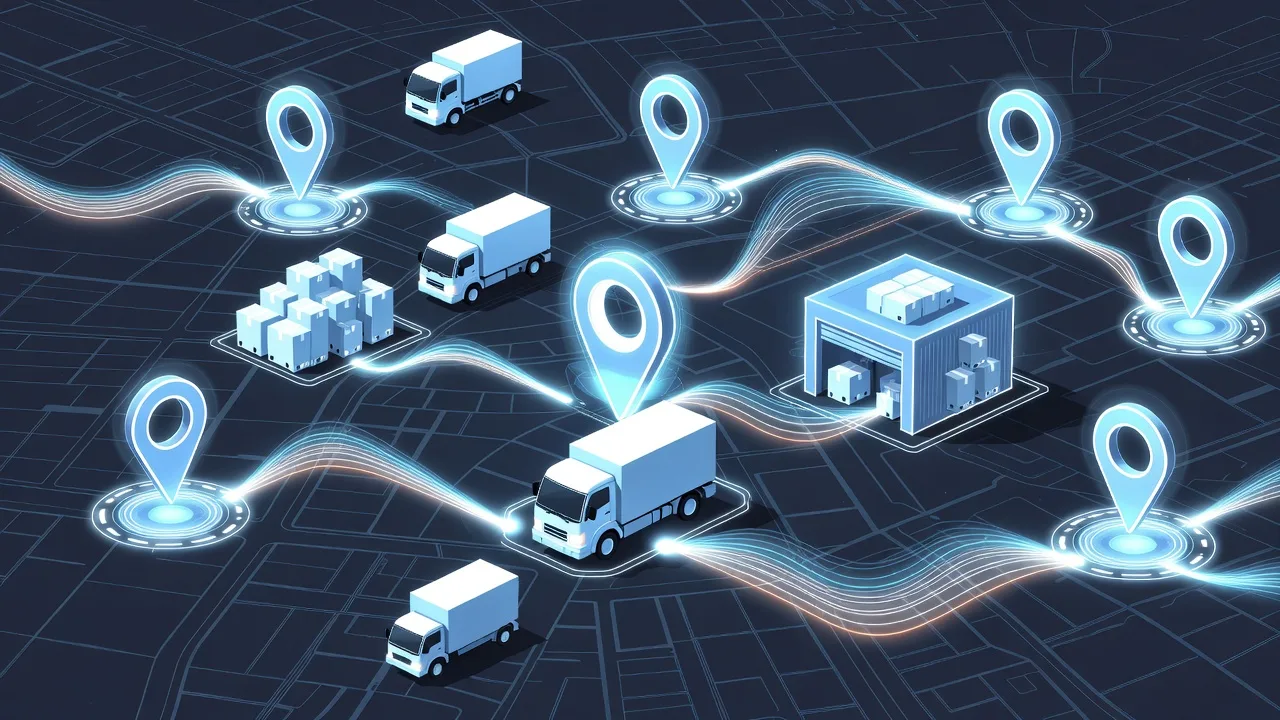
Enterprise Guide to Tools, Value, and Strategic AI Advantages for Logistics & Transportation
In 2026, supply chains are no longer linear pipelines. They are dynamic, interconnected systems that span suppliers, carriers, warehouses, ports, and financial operations. For enterprise buyers, the real question is not only which is the best supply chain software but also which platform can improve visibility, reduce risk, and deliver measurable business value across logistics and transportation.
This guide compares the top supply chain software categories and platforms, explains where each one fits best, and shows how AI agents are changing forecasting, execution, and decision-making for enterprise supply chains. If your organization needs better planning, faster response times, and stronger operational control, this article will help you choose the right direction.
What is the best supply chain software in 2026?
The best supply chain software depends on your business goals, operating model, and industry complexity. For large enterprises, the strongest platforms typically combine planning, execution, visibility, procurement, and ERP integration in one connected ecosystem.
The most widely recognized supply chain platforms in 2026 include SAP, Oracle SCM Cloud, Blue Yonder, Kinaxis, Infor, Coupa, and Microsoft Dynamics 365. Each serves a different need. Some are better for planning, some for transportation execution, some for supplier collaboration, and some for broad ERP-driven supply chain control.
For logistics and transportation teams, the most important differentiators are:
- Real-time visibility.
- Predictive forecasting.
- Transportation optimization.
- Automated decision support.
- Strong integration with ERP, WMS, TMS, and financial systems.
Best supply chain platforms at a glance
| Platform | Best for | Core strength | Enterprise fit |
|---|---|---|---|
| SAP | Large global enterprises | Deep ERP integration and end-to-end control | Excellent |
| Oracle SCM Cloud | Real-time visibility and control | Dashboards, demand sensing, transparency | Excellent |
| Blue Yonder | Unified planning and execution | AI-driven planning and supply chain orchestration | Excellent |
| Kinaxis RapidResponse | Fast scenario planning | Concurrent planning and what-if analysis | Excellent |
| Infor Nexus | Supplier risk & Retail, fashion, and global collaboration | Supplier visibility and logistics coordination | Excellent |
| Coupa | Procurement and spend management | Supply chain-related procurement and control | Strong |
| Microsoft Dynamics 365 | ERP-connected supply chain management | SCM and ERP integration with growing AI capabilities | Strong |
What “best” means in supply chain software for enterprises
For enterprise buyers, “best” does not mean the most feature-rich product. It means the platform that delivers the clearest business outcomes with the least operational friction.
In an enterprise environment, the best supply chain software should provide:
- Cross-functional intelligence across planning, procurement, logistics, and finance.
- Resilience through risk prediction and scenario planning.
- Operational automation that reduces manual intervention.
- Carrier and supplier orchestration across multiple partners.
- Transportation optimization powered by data and AI.
- Quantifiable ROI tied to cost, service, and speed.
If a platform cannot connect technology to measurable business outcomes, it is not a strategic investment.
Top supply chain software categories
Modern enterprise supply chains are built from several software layers, each serving a different purpose.
| Category | Core Strength | Best For | Example Capabilities |
|---|---|---|---|
| Supply Chain Planning (SCP) | Forecasting, demand shaping | Demand teams and planners | Forecasting, scenario simulation |
| Transportation Management System (TMS) | Route & freight planning | Logistics operations | Carrier selection, load optimization |
| Warehouse Management System (WMS) | Inventory and fulfillment control | Distribution and fulfillment centers | Slotting, picking, dock management |
| Supply Chain Visibility Platforms (SCV) | Real-time tracking | Operations leaders and executives | Event monitoring, ETA predictions |
| Procurement and Supplier Collaboration | Supplier risk and contracts | Procurement teams | Sourcing, compliance, risk management |
| AI Agent Platforms for Logistics | Autonomous decision-making | Innovation and automation teams | Predictive alerts, rerouting, optimization |
The most effective enterprise stacks usually combine several of these categories instead of relying on a single system.
Why AI agents matter in supply chain software
AI agents are one of the biggest shifts in enterprise supply chain software. Traditional software shows what is happening. AI agents help decide what should happen next.
In supply chain operations, AI agents can:
- Monitor real-time data from IoT devices, telematics, weather systems, and port activity.
- Predict disruptions before they affect service.
- Recommend actions such as rerouting shipments or reallocating stock.
- Learn from outcomes and improve future decisions.
This matters because supply chain leaders do not just need visibility. They need speed, adaptability, and automated response.
Traditional vs AI-driven supply chain software
| Feature | Traditional Supply Chain Software | AI Agent-Driven Platform |
|---|---|---|
| Visibility | Static dashboards | Continuous real-time insight |
| Forecasting | Historical trend models | Predictive and adaptive learning |
| Decision Execution | Manual alerts | Automated actions based on policies |
| Risk Detection | Rule-based flags | Predictive risk modeling |
| Optimization | Pre-defined scenarios | Continuous real-time optimization |
| Scalability | Limited custom logic | Self-improving agents |
AI-driven platforms are especially valuable in logistics and transportation, where delays, disruptions, and cost changes happen constantly.
Core Functional capabilities enterprise buyers should evaluate:
1. Real-Time End-to-End Visibility
Enterprises need a live view of movement from supplier to warehouse to customer. Real-time visibility reduces surprises and helps teams react faster to delays.
This capability directly affects on-time delivery and lead-time variability.
2. Predictive Forecasting
Modern supply chain software should look beyond historical trends. The best systems use external signals such as weather, carrier performance, port congestion, and strikes.
This improves forecasting accuracy and supports better inventory planning.
3. Automated Transportation Optimization
AI can help logistics teams choose better carriers, reroute shipments, and optimize lanes based on cost and service trade-offs. This reduces freight spend while improving delivery performance.
4. Dynamic Risk Detection
Small delays often become bigger disruptions. AI-based risk detection helps identify those patterns earlier and reduce exception handling.
This is one of the strongest use cases for AI in transportation-heavy supply chains.
5. Supply/Demand Balance
The best systems help companies align inventory, capacity, and customer demand. This improves fill rates, reduces stockouts, and limits capital tied up in excess inventory.
Enterprise ROI Expectations (Realistic & Measurable)
Enterprises should expect measurable improvements within 6–12 months:
| Objective | Expected Outcome | Measurement |
|---|---|---|
| Lower freight cost | 8–18% reduction | Freight $ per tonne/mile |
| Better delivery reliability | 10–20 pp improvement | On-Time Delivery % |
| Reduced stockouts | 15–30% drop | Stockout incidence |
| Improved forecasting | 20–35% more accuracy | Forecast error % |
| Less manual work | 30–50% fewer workflows | Manual intervention hours |
If a supply chain project does not connect to hard metrics, it is unlikely to deliver meaningful value.
What to Look for in AI Supply Chain Software Contracts
Not every AI-powered platform is enterprise-ready. Before signing a contract, buyers should evaluate several non-negotiable criteria.
- Open Data Integration
- The platform should connect easily with ERP, WMS, TMS, telematics, and IoT systems.
- Explainability
- Planners should understand how the system makes decisions.
- Governance & Control
- Admins should define when agents can act automatically.
- Scalable Agent Framework
- The platform should support new use cases without heavy engineering.
- SLAs Aligned to Business Outcomes
- Contracts should focus on business outcomes, not just uptime.
Implementation mistakes enterprises make
Many supply chain software projects fail because companies treat them like IT rollouts instead of business transformations.
The most common mistakes are:
1. Buying feature lists instead of business outcomes.
2. Ignoring change management.
3. Underinvesting in data quality.
4. Expecting AI to work without a clean data foundation.
5. Launching automation before defining safe operating rules.
Enterprise implementation roadmap
A practical supply chain software rollout should follow five phases.
Phase 1: Strategy & Architecture
- Define top 3 business outcomes (e.g., freight cost, on-time delivery, inventory efficiency)
- Map current systems and data gaps
Phase 2: Data Enablement
- Build or refine data fabric (streaming where possible)
- Cleanse master data
Phase 3: Pilot AI Agents
- Start with predictive visibility and risk alerts
- Measure lift vs baseline over 60–90 days
Phase 4: Scale Automation
- Move from alerts to agent-driven recommendations
- Define safe action policies (what agents can auto-execute)
Phase 5: Continuous Improvement
- Review automated decisions monthly
- Retrain models with real outcomes
Procurement checklist for vendor demos
Use the following questions when evaluating supply chain software vendors.
| Question | Why It Matters |
|---|---|
| How do you integrate with existing systems? | Avoid expensive rip-and-replace projects |
| How do your AI agents make decisions? | Transparency builds trust |
| Can users override agent actions? | Human governance is essential |
| What outcomes do you guarantee? | Business results matter more than uptime |
| Which third-party data feeds do you use? | External signals improve prediction quality |
| How do you measure ROI? | You need visible KPIs |
Best Supply Chain Software Stack in 2026(Enterprise)
| Layer | Solution Type | Purpose |
|---|---|---|
| Data Fabric | Integration platform | Connect all data sources |
| Core ERP | Backbone system | Financials and master data |
| Planning | SCP | Forecasting and scenario modeling |
| Execution | TMS + WMS | Transportation and warehouse operations |
| Visibility | SCV platform | Event tracking and ETA prediction |
| AI Agents | Autonomous execution layer | Predict and act |
This layered model gives enterprises more flexibility than trying to replace everything with a single platform.
Final recommendation by use case
If you are choosing supply chain software in 2026, start with your business need, not the vendor name.
- Choose SAP if you need deep ERP integration and enterprise-wide control.
- Choose Oracle SCM Cloud if you want real-time dashboards and AI-supported planning.
- Choose Blue Yonder if unified planning and execution are top priorities.
- Choose Kinaxis if scenario modeling and concurrency matter most.
- Choose Infor Nexus if global collaboration and retail supply chains are central to your business.
- Choose Coupa if procurement and spend control are part of the buying decision.
- Choose Microsoft Dynamics 365 if you want SCM tightly connected to ERP with growing AI support.
For logistics and transportation leaders, the biggest competitive advantage in 2026 will come from platforms that sit above planning and execution and help teams predict and act faster.
Frequently Asked Questions
The best supply chain software for enterprise logistics is a platform that combines planning, execution, visibility, and AI-driven decision support. The strongest solutions improve resilience, lower freight costs, and reduce manual work.
AI agents improve transportation management by ingesting real-time signals such as telematics, weather, and port status, then recommending or triggering actions such as rerouting or carrier changes.
Yes. The most effective platforms are designed to integrate through APIs or data fabrics so enterprises can connect AI capabilities without replacing core systems.
The most important KPIs include freight cost per unit, on-time delivery percentage, forecast accuracy, inventory days of supply, and exception handling volume.