
Payment Automation
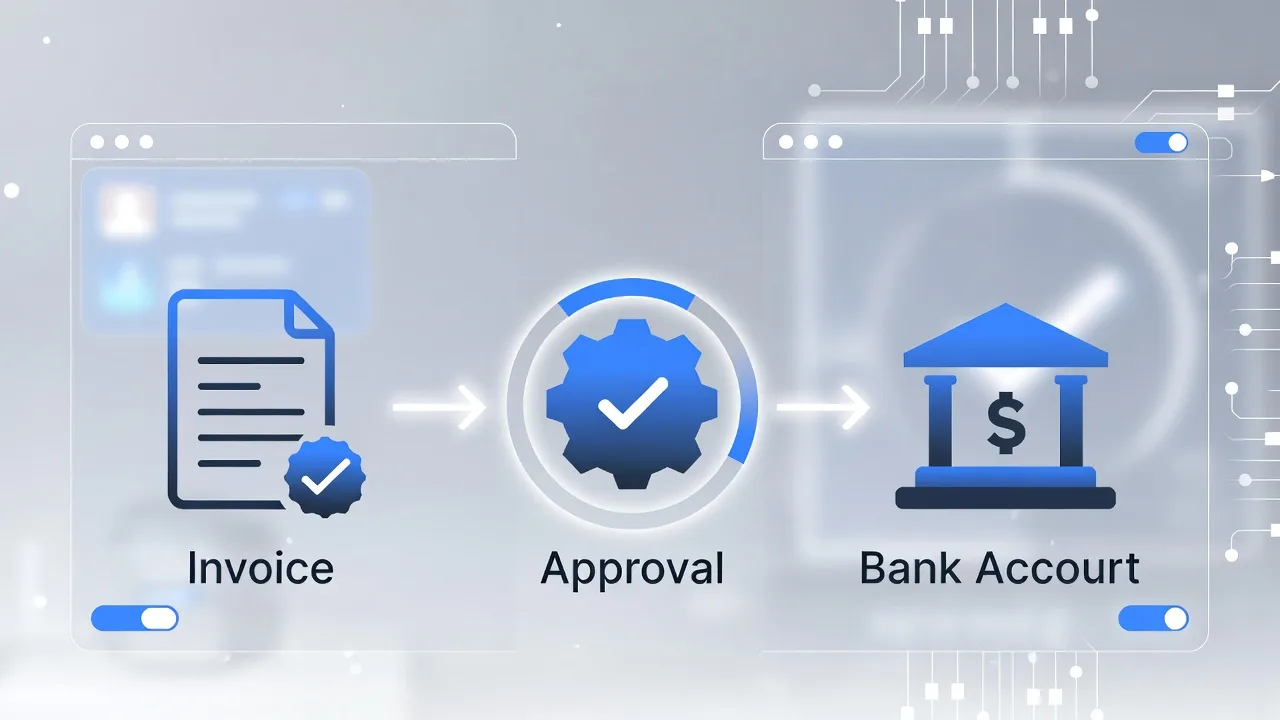
Payment Automation: How AI Agents Are Redefining Financial Operations in Logistics and Transportation
In 2026, Payment Automation has evolved from simple electronic fund transfers (EFT) into intelligent, “agentic” systems that manage the entire lifecycle of a transaction, from invoice receipt to final bank reconciliation, with minimal human intervention.
How Payment Automation Works?
Modern systems use a four-step automated pipeline to replace manual busywork:
- Instruction Capture: AI-driven OCR (Optical Character Recognition) extracts vendor details, amounts, and due dates from digital invoices with up to 99% accuracy.
- Automated Gatekeeping: The system performs three-way matching—comparing the invoice against purchase orders and goods receipts—to prevent overpayment or fraud.
- Digital Approval: Invoices are routed to the correct managers based on predefined rules (e.g., dollar amount or department).
- Strategic Execution: Once approved, the system automatically triggers payment via ACH, wire, or virtual card on the optimal date to capture early payment discounts.
Top Payment Automation Platforms for 2026
| Platform | Best For | Standout Features |
|---|---|---|
| Tipalti | Global Operations | Mass payments in 120+ currencies and automated international tax compliance. |
| Stampli | Collaboration | Centered on AP communication; features “Billy the Bot” AI for smart coding. |
| BILL | SMBs | Deep integration with QuickBooks/Xero and a vast pre-vetted vendor network. |
| Ramp | Spend Control | Combines corporate cards, bill pay, and expense management with “AI Autopilot”. |
| Zone & Co | NetSuite Users | Native “SuiteApps” that operate entirely inside NetSuite, eliminating data silos. |
Key Benefits in 2026
- Cost Reduction: Processing costs can drop from $15+ manually to approximately $2 per transaction through automation.
- Faster Cycles: Average invoice-to-pay times have decreased from 10–14 days to just 2–3 days.
- Fraud Prevention: Automated systems identify anomalies and mule accounts in real-time, protecting against the 79% of companies that reported fraud attempts in the past year.
- Visibility: Real-time dashboards provide a “single source of truth,” allowing CFOs to forecast cash requirements instantly rather than waiting for month-end reports.
Emerging Trends for 2026
- Identity-Driven Payments: The “Log in and Pay” trend uses digital identity wallets to authenticate users and authorize payments simultaneously, drastically reducing friction.
- Real-Time Rails: Broader adoption of instant payment networks (like UPI in India or SEPA Instant in Europe) allows for immediate fund settlement and improved liquidity.
- Embedded Finance: Payments are increasingly “invisible,” occurring automatically within business apps, IoT devices (e.g., smart fridges), or vehicles without a separate checkout step.
Why Payment Automation Has Become a Strategic Priority for Logistics Enterprises?
For most logistics enterprises, payments are still treated as a back-office function. That mindset is expensive.
Transportation payments sit at the intersection of operations, finance, and compliance. When payments lag or break, the impact shows up everywhere: strained carrier relationships, inaccurate accruals, audit exposure, and lost negotiating power.
Several industry forces are accelerating the need for automation:
- High invoice volumes driven by multi-leg, multi-carrier shipments
- Thin margins where small errors compound quickly
- Increasing regulatory scrutiny across geographies
- Carrier expectations for faster, predictable payouts
Manual or semi-automated payment processes simply cannot scale with this complexity.
Payment automation shifts finance from reactive processing to controlled execution.
What Payment Automation Really Means in Logistics and Transportation?
Payment automation in logistics is not just about digitizing payments. It is about automating the entire payment lifecycle, from invoice ingestion to final settlement.
That lifecycle typically includes:
| Payment Stage | What Happens in Logistics |
|---|---|
| Invoice capture | Carrier invoices arrive via EDI, PDF, portals, or email |
| Data validation | Charges are matched against contracts, rates, and shipment data |
| Exception handling | Discrepancies like detention, re-weighs, or accessorials are reviewed |
| Approval workflows | Multi-level approvals based on value, vendor, or region |
| Payment execution | Funds released via ACH, RTP, wire, or cross-border rails |
| Reconciliation | Payments matched back to ERP, TMS, and general ledger |
Traditional automation covers pieces of this flow. AI-based payment automation covers the entire flow as a connected system.
Where Traditional Payment Automation Breaks Down for Logistics Enterprises?
Many enterprises believe they have payment automation because they use ERP workflows or AP automation tools. In practice, these tools struggle in logistics environments.
The reasons are structural.
Logistics payments are not uniform. They are full of exceptions. A single shipment can generate multiple invoices, each with conditional charges that depend on real-world events.
Traditional rule-based systems fail when:
- Carrier invoices do not match contracted rates exactly
- Charges depend on GPS events, dwell time, or delivery windows
- Contracts differ by lane, season, or fuel index
- Data lives across TMS, WMS, telematics, and ERP systems
When systems cannot reason through these conditions, humans step in. Automation stops. Costs rise again.
How AI Agents Transform Payment Automation in Logistics?
AI agents introduce a fundamentally different model.
Instead of relying only on static rules, AI agents observe, learn, and act across systems. They understand how logistics actually works.
In payment automation, AI agents can:
- Interpret unstructured invoices and carrier notes
- Match charges against dynamic contract terms
- Cross-verify claims using shipment data, GPS logs, and timestamps
- Decide whether exceptions are valid or need escalation
- Execute payments autonomously within defined risk thresholds
This turns payment automation into an intelligent, adaptive system rather than a fragile workflow.
AI-Driven Payment Automation Across the Logistics Payment Lifecycle
Below is how AI agents typically operate at each stage of the payment process.
Invoice Intake That Understands Logistics Context
AI agents ingest invoices from multiple sources and normalize them automatically. More importantly, they understand logistics terminology and patterns.
For example, an agent can distinguish between:
- Legitimate detention based on dwell time data
- Duplicate accessorial charges
- Fuel surcharge miscalculations based on index dates
This reduces false exceptions before they reach finance teams.
Contract-Aware Validation at Scale
Logistics contracts are complex and frequently amended. AI agents can continuously reference:
- Lane-specific rate cards
- Customer-specific SLAs
- Seasonal pricing rules
- Fuel index formulas
Validation becomes contextual instead of binary.
Intelligent Exception Resolution
Not all exceptions need human review. AI agents can resolve routine discrepancies automatically and escalate only high-risk cases.
This shifts AP teams from transaction processing to oversight.
Autonomous Payment Execution With Controls
Once validation is complete, AI agents trigger payments using approved methods while enforcing:
- Vendor-level limits
- Fraud detection thresholds
- Regulatory constraints by region
Payments move faster without sacrificing control.
Continuous Reconciliation and Audit Readiness
AI agents reconcile payments back to source systems in real time, creating an always-ready audit trail.
Business Impact of Payment Automation Powered by AI Agents
For enterprise buyers, the value of payment automation is measured in outcomes, not features.
| Business Area | Impact of AI-Driven Payment Automation |
|---|---|
| Working capital | Faster, predictable settlements improve cash flow |
| Carrier relationships | On-time payments increase carrier loyalty and capacity access |
| Cost control | Reduced leakage from overpayments and missed discrepancies |
| Finance productivity | AP teams handle exceptions, not invoices |
| Compliance | Strong audit trails and policy enforcement |
| Scalability | Volume growth without linear headcount growth |
This is why payment automation is increasingly owned at the CFO and COO level, not just within AP.
Why Logistics and Transportation Companies Need Purpose-Built Payment Automation?
Generic payment automation platforms are built for uniform invoices and predictable contracts. Logistics is neither.
A logistics-ready payment automation platform must integrate deeply with:
- Transportation Management Systems (TMS)
- Telematics and GPS data sources
- Contract and rate management systems
- ERP and financial reporting tools
AI agents act as the connective tissue across these systems, turning fragmented data into executable decisions.
Common Enterprise Concerns About Payment Automation and How AI Addresses Them
Enterprise buyers often raise legitimate concerns before adopting advanced payment automation.
| Concern | How AI-Driven Automation Addresses It |
|---|---|
| Loss of control | Agents operate within configurable approval and risk boundaries |
| Audit risk | Every decision is logged, explainable, and traceable |
| Integration complexity | Agents adapt to existing systems instead of replacing them |
| Edge cases | Machine learning improves with exposure to real logistics scenarios |
| Change management | Gradual automation with human-in-the-loop options |
AI does not remove human oversight. It removes unnecessary human effort.
Payment Automation as a Competitive Advantage in Logistics
In a market where service levels and margins are tight, payment automation becomes a differentiator.
Faster payments attract better carriers. Cleaner reconciliation improves financial visibility. Reduced leakage directly improves margins.
Enterprises that treat payment automation as infrastructure fall behind those that treat it as strategy.
What to Look for When Evaluating Payment Automation Solutions for Logistics?
Enterprise buyers should evaluate beyond surface features.
Key criteria include:
- Ability to understand logistics-specific charges and contracts
- AI-driven exception handling, not just rule-based workflows
- Deep integration with operational data sources
- Explainability of automated decisions
- Proven scalability across regions and volumes
If a solution cannot reason about logistics reality, it will collapse under scale.
The Future of Payment Automation in Logistics and Transportation
The future is not fully automated payments without humans. It is agent-driven finance operations where humans focus on strategy, not reconciliation.
As AI agents mature, payment automation will evolve into:
- Predictive cash flow planning based on shipment pipelines
- Dynamic carrier incentive models tied to payment speed
- Real-time cost anomaly detection before invoices arrive
Payment automation will stop being a cost center tool and become a financial intelligence layer.