
LTL Shipping Software for Smarter Freight Management
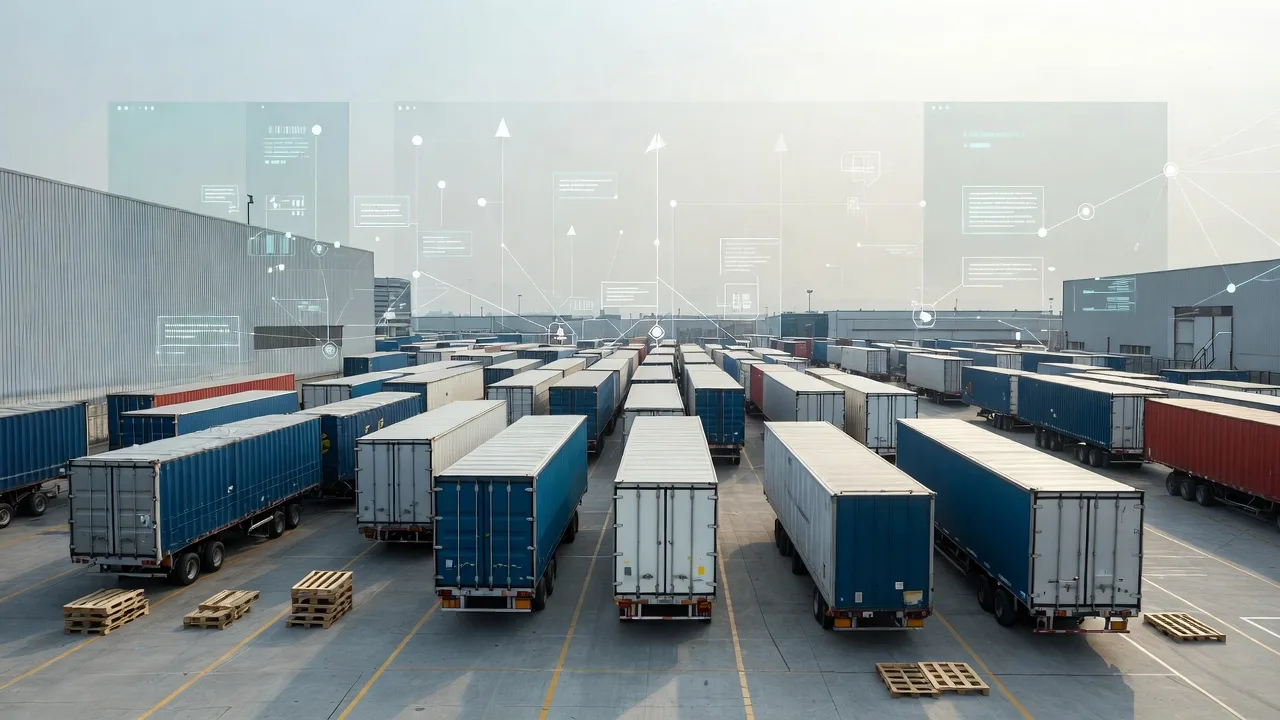
LTL Shipping Software: How Enterprise Logistics Teams Are Re-engineering Less-Than-Truckload Operations With AI
Less-than-truckload shipping has always lived in the messy middle of logistics. It is cheaper than full truckload for many lanes, but operationally far more complex. Multiple shippers share the same trailer. Rates depend on freight class, density, accessorials, and constantly shifting carrier rules. Transit times vary. Visibility is fragmented.
For enterprise logistics teams managing thousands of weekly LTL moves, this complexity does not just slow operations. It creates margin leakage, billing disputes, poor carrier performance, and blind spots that compound as scale increases.
This is why LTL shipping software is no longer a “nice-to-have” system sitting beside a TMS. It is becoming a core decision engine, especially as AI agents begin to automate rating, booking, auditing, and exception handling across fragmented carrier networks.
This article breaks down what modern LTL shipping software actually does, how AI-driven LTL platforms differ from legacy tools, and what enterprise buyers should evaluate before making a long-term investment.
Why LTL shipping complexity breaks traditional logistics systems at scale?
At low volumes, LTL can be managed manually or with basic TMS modules. At enterprise scale, that approach collapses quickly.
The reasons are structural.
LTL pricing is rule-based, not flat. A small change in pallet dimensions, density, or pickup location can swing costs dramatically. Carrier contracts differ by lane, region, and service level. Accessorials are applied inconsistently and often incorrectly. Claims and re-weigh disputes are common.
Traditional transportation systems were built for deterministic workflows. LTL shipping is probabilistic and exception-heavy.
This gap is where specialized LTL freight software becomes essential.
What LTL shipping software actually covers beyond basic transportation management?
Many buyers assume LTL shipping software is simply “a TMS feature.” In practice, it is a dedicated layer designed to handle the unique mechanics of less-than-truckload freight.
At an enterprise level, LTL shipping software typically includes:
| Core Capability | What It Solves in LTL Operations |
|---|---|
| Automated LTL rating engine | Applies complex carrier tariffs, discounts, NMFC classes, and accessorial logic |
| Carrier contract intelligence | Interprets lane-level and rule-based pricing, not just static rate tables |
| Shipment consolidation logic | Optimizes how partial loads are grouped across orders and facilities |
| Real-time booking and tendering | Connects directly with LTL carriers and broker networks |
| Freight class optimization | Uses density data to reduce misclassification and overcharges |
| Invoice audit and dispute automation | Detects re-weigh errors, duplicate charges, and incorrect accessorials |
| Exception management workflows | Flags delays, damages, and service failures automatically |
Without this layer, enterprises often overpay on LTL by 5–15 percent annually without realizing it.
LTL software as a decision system, not just an execution tool
Modern LTL software is shifting from execution to intelligence.
Instead of asking “which carrier is cheapest,” enterprise teams are asking:
- Which carrier consistently meets service levels on this lane?
- Where do accessorials spike unexpectedly?
- Which facilities generate the most re-weigh disputes?
- When does LTL stop making sense versus pooled truckload?
This is where AI-driven LTL shipping software changes the game.
How AI agents transform less-than-truckload software from static rules to learning systems?
Traditional LTL freight software relies on predefined rules. AI-native platforms introduce learning agents that adapt as conditions change.
In an AI-driven LTL system, agents continuously analyze:
- Historical shipment outcomes
- Carrier performance by lane and facility
- Billing anomalies and dispute resolution patterns
- Seasonal capacity constraints
- Real-time market signals
Over time, these agents begin to make proactive decisions rather than reactive ones.
Example: AI agent behavior inside LTL shipping software
| Scenario | Traditional System | AI-Driven LTL Software |
|---|---|---|
| Rate selection | Chooses lowest contracted rate | Chooses carrier with best cost-to-service ratio |
| Freight class errors | Detected after invoice | Predicted and corrected before booking |
| Carrier capacity issues | Discovered at tender rejection | Anticipated and rerouted proactively |
| Invoice audits | Manual or rule-based | Pattern-based anomaly detection |
| Exception handling | Human escalation | Agent-led resolution with human oversight |
This shift reduces manual work, improves service reliability, and protects margins at scale.
Why enterprise buyers are separating LTL freight software from general TMS platforms?
Many enterprises start with a single TMS. As LTL volume grows, limitations surface.
General TMS platforms are optimized for full truckload and predictable routing. LTL requires:
- Deeper tariff logic
- Carrier-specific rule interpretation
- High-frequency exception handling
- Continuous auditing and learning
This has led large shippers to either extend their TMS with specialized LTL software or adopt standalone LTL platforms that integrate upstream and downstream.
The operational impact of modern LTL shipping software across the enterprise
When implemented correctly, LTL software impacts more than the transportation team.
| Business Function | LTL Software Impact |
|---|---|
| Logistics | Lower freight spend, fewer manual interventions |
| Finance | Cleaner invoices, faster audits, fewer disputes |
| Procurement | Better carrier negotiations using real performance data |
| Customer service | Improved delivery predictability and communication |
| IT | Reduced custom rule maintenance through AI agents |
The value compounds as shipment volume increases.
LTL software, less than truckload software, and LTL freight software explained clearly
These terms are often used interchangeably, but enterprise buyers should understand the nuance.
| Term | How It Is Commonly Used |
|---|---|
| LTL software | Broad category covering planning, execution, and analytics |
| Less than truckload software | Often used in procurement and carrier-facing contexts |
| LTL freight software | Emphasizes freight rating, billing, and auditing depth |
In practice, modern platforms combine all three under one architecture, with AI agents acting as the connective tissue.
What enterprise buyers should evaluate when selecting LTL shipping software?
Choosing LTL software is a multi-year decision. The wrong platform creates operational debt that is expensive to unwind.
Key evaluation criteria include:
- Tariff and contract depth: Can the system handle real carrier rules, not simplified rate tables?
- AI maturity: Are AI agents embedded into workflows, or is AI just a reporting layer?
- Carrier ecosystem coverage: Does it integrate with national, regional, and niche LTL carriers?
- Audit and dispute automation: How much manual work remains after go-live?
- Scalability and adaptability: Can the platform handle growth, seasonality, and network changes?
- Explainability: Can teams understand why the system made a decision?
Enterprise buyers should push vendors to demonstrate real shipment data flows, not polished demos.
Why AI-native LTL freight software is becoming a competitive advantage?
In tight margin environments, small efficiency gains matter.
AI-driven LTL shipping software delivers advantages that compound:
- Continuous cost optimization without constant rule updates
- Fewer billing surprises and faster financial close cycles
- Better carrier relationships based on data, not anecdotes
- Reduced dependency on tribal knowledge
As logistics networks grow more fragmented, static systems fall behind. Learning systems improve with every shipment.
The future of less-than-truckload software is autonomous, not just automated
Automation executes predefined tasks. Autonomy adapts.
The next generation of LTL software will:
- Negotiate capacity dynamically
- Predict disruptions before they occur
- Optimize freight class and packaging decisions upstream
- Resolve exceptions without human escalation
- Continuously renegotiate the cost-service tradeoff
AI agents are the mechanism enabling this shift.
Enterprises that adopt early gain operational leverage that is difficult for competitors to replicate quickly.
Final thought
LTL shipping has always been one of the hardest logistics problems to scale cleanly. Modern LTL shipping software, powered by AI agents, is finally turning that complexity into a controllable system.
For enterprise logistics leaders, the question is no longer whether to modernize LTL operations, but how quickly they can move from static rules to learning systems before inefficiencies become structural.
People Also Ask
LTL shipping software manages the planning, rating, booking, tracking, and auditing of less-than-truckload shipments. At an enterprise level, it reduces freight spend, improves service reliability, and automates exception handling across complex carrier networks.
A standard TMS focuses on routing and execution. LTL freight software goes deeper into tariff logic, freight classification, invoice auditing, and carrier-specific rules, which are critical for managing shared truckload shipments accurately.
Yes. AI agents learn from historical shipment data, billing patterns, and carrier performance to optimize decisions proactively. This reduces manual work, prevents errors before they occur, and improves cost-to-service tradeoffs over time.
While enterprises see the highest ROI, mid-market shippers with growing LTL volumes also benefit, especially when billing disputes and accessorial charges begin to increase disproportionately.
Enterprises should prioritize tariff depth, AI maturity, audit automation, carrier coverage, and explainability. The goal is not just lower rates, but sustained operational control as volume and complexity increase.