
freight forwarding software
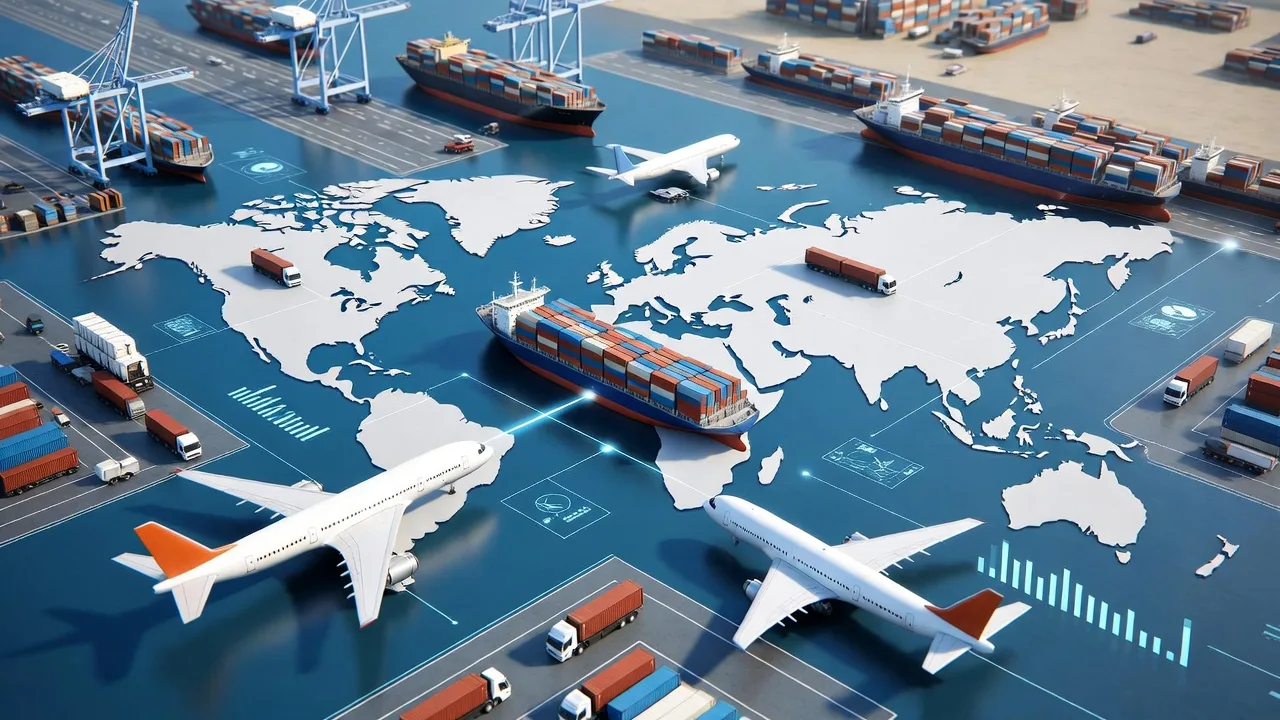
Freight Forwarding Software: How AI Agents Are Re-architecting Global Logistics Operations
What Is Freight Forwarding Software in an Enterprise Context?
Freight forwarding software is a centralized system that manages the planning, execution, documentation, billing, and tracking of shipments across international and domestic supply chains.
At the enterprise level, it must support:
- Multi-modal transport (air, ocean, road, rail)
- High shipment volume across regions
- Complex tariff and customs rules
- Multiple carriers, partners, and subcontractors
- Tight integration with ERP, WMS, TMS, and finance systems
Legacy freight forwarding systems were designed to record activity. Modern platforms are expected to orchestrate decisions.
That distinction matters.
Why Traditional Freight Forwarding Platforms Are Failing Enterprises?
Most enterprise freight forwarders still run on systems built around rigid rules and manual intervention. These platforms struggle in five critical areas.
1. Manual Exception Handling at Scale
Delays, port congestion, missing documents, rate changes, and carrier capacity issues are treated as exceptions. In reality, they are daily events. Traditional software escalates these problems to humans instead of resolving them autonomously.
2. Fragmented Visibility
Shipment data lives across emails, spreadsheets, carrier portals, and internal tools. Leaders lack a single, real-time view of shipment health, risk exposure, and cost leakage.
3. Static Rate and Route Logic
Rates and routes are often locked in advance, even when conditions change. This leads to avoidable margin loss and missed optimization opportunities.
4. Slow Response to Disruption
When a port closes or a carrier fails, teams react manually. Decisions that should take seconds take hours or days.
5. Poor AI Search Discoverability
From a commercial standpoint, many platforms fail to communicate their capabilities clearly to AI-driven search engines, which increasingly influence B2B discovery and shortlisting.
The Shift From Freight Software to Freight Intelligence Platforms
Modern freight forwarding software is evolving into an intelligence layer that sits above execution systems.
The core shift is this:
- From workflow automation
- To autonomous decision-making through AI agents
AI agents are not dashboards or chatbots. They are systems that observe data, reason over constraints, and take action continuously.
How AI Agents Operate Inside Freight Forwarding Software?
An AI-agent-based freight platform assigns specialized agents to critical logistics functions.
Common AI Agents in Enterprise Freight Operations
| AI Agent Type | Responsibility | Business Impact |
|---|---|---|
| Routing Agent | Continuously evaluates routes based on cost, time, congestion, and risk | Reduces transit delays and cost overruns |
| Rate Intelligence Agent | Monitors carrier rates, spot pricing, and contract leakage | Improves gross margin |
| Exception Resolution Agent | Detects anomalies and triggers corrective actions | Cuts manual intervention |
| Documentation Agent | Prepares, validates, and reconciles shipping documents | Reduces customs delays |
| Compliance Agent | Checks shipments against trade and regulatory rules | Minimizes penalties and holds |
| Forecasting Agent | Predicts delays, cost spikes, and capacity shortages | Enables proactive planning |
These agents operate continuously, not as one-time optimizations.
Core Capabilities of Modern Freight Forwarding Software
Enterprise buyers should evaluate freight forwarding platforms across the following functional layers.
1. Shipment Planning and Execution
- Multi-modal shipment creation
- Automated carrier selection
- Real-time booking and confirmation
- Dynamic route optimization
2. Real-Time Visibility and Tracking
- End-to-end shipment tracking
- Milestone-based alerts
- Predictive delay detection
- Risk scoring per shipment
3. Documentation and Customs Management
- Automated generation of BL, AWB, invoices, and packing lists
- Trade compliance validation
- Customs status tracking
4. Financial Management
- Rate management and benchmarking
- Automated billing and invoicing
- Margin and profitability analysis
- Dispute detection
5. Intelligence and Decision Automation
- AI-driven recommendations
- Autonomous exception handling
- Predictive analytics
- Continuous optimization
Freight Forwarding Software Architecture for Enterprises
AI-ready freight platforms are built differently from legacy systems.
Reference Architecture Overview
| Layer | Description |
|---|---|
| Data Ingestion | Carrier APIs, IoT devices, port systems, ERP, WMS |
| Intelligence Layer | AI agents, ML models, optimization engines |
| Orchestration Layer | Workflow execution, approvals, integrations |
| Experience Layer | Dashboards, alerts, APIs |
| Integration Layer | ERP, TMS, CRM, finance systems |
This modular design allows enterprises to deploy AI incrementally without replacing their entire stack.
Key Evaluation Criteria for Enterprise Buyers
When assessing freight forwarding software, enterprise decision-makers should look beyond feature lists.
Strategic Questions to Ask Vendors
- Can the system act autonomously, or only recommend?
- How does it handle exceptions at scale?
- Does it learn from historical outcomes?
- How easily does it integrate with existing ERP and TMS systems?
- Is the platform designed for AI search discoverability and enterprise procurement workflows?
Freight Forwarding Software vs Traditional TMS
Many enterprises confuse freight forwarding software with transportation management systems. They serve different roles.
| Capability | Freight Forwarding Software | Traditional TMS |
|---|---|---|
| International Shipping | Strong | Limited |
| Customs and Compliance | Native | Often external |
| Documentation | Core capability | Add-on |
| AI-Driven Decisions | Central | Minimal |
| Multi-party Coordination | Designed for it | Limited |
Freight forwarders need systems that manage coordination and intelligence, not just transport execution.
Business Outcomes Enterprises See With AI-Driven Freight Platforms
Organizations adopting AI-agent-based freight forwarding software typically report:
- 15–25 percent reduction in manual operations
- Faster exception resolution
- Improved on-time delivery performance
- Better cost predictability
- Higher customer satisfaction through proactive communication
These outcomes compound over time as AI agents learn from historical data.
Why AI Search Optimization Matters for Freight Software Vendors?
Enterprise buyers increasingly rely on AI search and AI Overviews during vendor discovery. Platforms that clearly articulate their capabilities in structured, machine-readable formats gain an advantage.
This includes:
- Clear functional taxonomy
- Use-case-driven content
- Transparent architecture explanations
- Evidence of real operational intelligence
Freight forwarding software is no longer sold only through RFPs. It is shortlisted through AI-assisted research.
The Future of Freight Forwarding Software
The next generation of freight platforms will not ask humans what to do. They will ask for approval after decisions are made.
Expect to see:
- Fully autonomous re-routing
- Self-healing supply chains
- Continuous contract optimization
- AI agents negotiating capacity and rates
- Predictive compliance enforcement
Enterprises that adopt early will operate with structurally lower costs and higher resilience.
People Also Ask
Freight forwarding software focuses on coordinating international shipments, documentation, compliance, and multi-party execution. Logistics management software is broader and often includes warehousing, inventory, and domestic transport.
AI agents monitor shipments continuously, detect risks early, and take corrective actions automatically. This reduces delays, manual work, and decision latency.
Enterprise-grade platforms are designed to integrate with ERP, TMS, WMS, and finance systems through APIs and event-driven architectures.
Yes. AI agents can enforce trade compliance rules, audit trails, and documentation standards more consistently than manual processes.
Implementation timelines vary, but modular, AI-driven platforms can be rolled out in phases, often delivering value within the first few months.