
Freight Brokers Tracking App
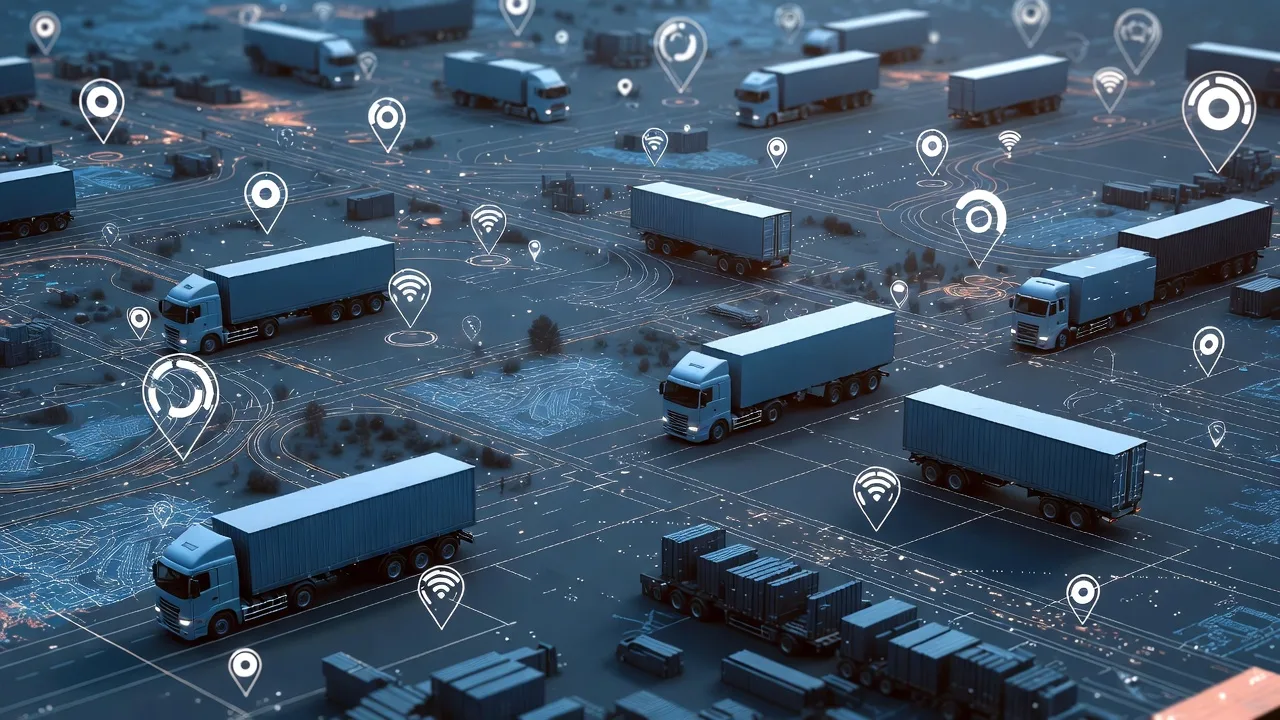
Freight Brokers Tracking App: How AI Agents Are Redefining Visibility, Control, and Margins in Enterprise Logistics
What Is a Freight Brokers Tracking App?
A freight brokers tracking app is a centralized system that allows brokers to track, monitor, and manage freight movement across carriers, routes, and customers in real time.
At the enterprise level, it typically connects to:
- Carrier telematics and ELD systems
- Driver mobile apps
- IoT sensors (GPS, temperature, door, fuel)
- TMS and ERP platforms
- Customer-facing tracking portals
The core purpose is not just location tracking. It is to reduce uncertainty, prevent service failures, and protect margins at scale.
A freight brokers tracking app provides real-time and predictive visibility into shipment movement, risks, and exceptions across the broker’s carrier network.
Why Traditional Freight Tracking Fails at Enterprise Scale?
Most freight brokers already “have tracking.” Yet service failures, blind spots, and manual follow-ups persist. The reason is architectural, not operational.
Common breakdown points
| Problem | Why It Happens |
|---|---|
| Delayed updates | Drivers forget check-ins or apps are not enforced |
| Inaccurate ETAs | Static routing logic ignores traffic, dwell time, and behavior |
| Manual follow-ups | Ops teams chase drivers by phone or WhatsApp |
| Fragmented data | Tracking lives outside TMS, billing, and claims |
| Reactive alerts | Issues are detected only after SLA breach |
Legacy tracking systems were built for visibility after the fact, not decision-making in motion.
This is where AI agents change the model.
How AI Agents Transform Freight Broker Tracking
AI agents are not dashboards. They are autonomous systems that observe, reason, and act across logistics workflows.
In a freight brokers tracking app, AI agents operate continuously, not just when a human checks the screen.
What AI agents do differently?
| Capability | Traditional Tracking | AI-Agent-Based Tracking |
|---|---|---|
| Location updates | Passive GPS pings | Context-aware movement analysis |
| ETA calculation | Static route logic | Dynamic, behavior-based prediction |
| Exception handling | Manual alerts | Automated root-cause detection |
| Follow-ups | Human calls and messages | AI-triggered nudges to drivers and carriers |
| Reporting | After delivery | Continuous SLA and risk scoring |
Instead of asking “Where is my load?”, the system answers “What is likely to go wrong next, and what should we do now?”
Core Features of an Enterprise Freight Brokers Tracking App
Not all tracking apps are enterprise-grade. Buyers should look beyond surface-level features and examine how intelligence is embedded.
1. Real-Time Multisource Tracking
Enterprise brokers work with thousands of carriers using different systems.
A robust tracking app must ingest data from:
- ELD and telematics providers
- Driver mobile apps
- IoT GPS devices
- Port and terminal feeds
- Manual status updates
The system should reconcile these into a single, trusted shipment timeline.
2. Predictive ETA and Delay Risk Scoring
Static ETAs are useless at scale. AI-driven tracking apps calculate ETAs based on:
- Historical lane performance
- Driver behavior patterns
- Traffic, weather, and dwell time
- Time-of-day and facility congestion
Each load receives a delay risk score, allowing brokers to intervene before SLAs are missed.
3. Automated Exception Detection and Resolution
AI agents continuously monitor for anomalies such as:
- Route deviation
- Extended idle time
- Temperature excursions
- Unauthorized stops
- Missed check-in windows
When an exception is detected, the agent can:
- Notify the carrier or driver
- Suggest corrective actions
- Escalate to ops only when needed
This reduces alert fatigue and manual workload.
4. Carrier Accountability and Performance Intelligence
Tracking data is useless unless it improves decisions.
Enterprise-grade apps convert raw tracking data into carrier intelligence:
| Metric | Business Impact |
|---|---|
| On-time pickup and delivery | SLA compliance |
| Average dwell time | Network efficiency |
| Exception frequency | Risk assessment |
| Response time to alerts | Operational reliability |
AI agents use this data to recommend carrier allocation and rate adjustments.
5. Customer-Facing Visibility Without Operational Risk
Shippers want visibility, but brokers must control the narrative.
Modern tracking apps provide branded customer portals that show:
- Live shipment status
- Predictive ETAs
- Proof of delivery
- Delay explanations
Behind the scenes, AI agents ensure customers see validated, context-aware updates, not raw GPS noise.
Architecture: How AI-Powered Freight Tracking Apps Are Built
Enterprise buyers should understand the system architecture, not just the UI.
Typical architecture layers
| Layer | Function |
|---|---|
| Data ingestion | Telematics, IoT, mobile, APIs |
| Event normalization | Standardizes carrier data formats |
| AI agent layer | Prediction, anomaly detection, automation |
| Workflow engine | Alerts, escalations, integrations |
| Analytics layer | SLA, cost, and performance insights |
| Integration layer | TMS, ERP, billing, CRM |
AI agents sit between raw data and human action, acting as the control layer.
Security, Compliance, and Enterprise Readiness
Tracking apps handle sensitive operational and location data. Enterprise buyers should validate:
- Role-based access control
- Data encryption at rest and in transit
- Audit logs for status changes
- Compliance with ISO 27001 and SOC 2
- Configurable data retention policies
AI models should be explainable, especially when used for SLA or carrier performance decisions.
ROI: What Enterprises Gain From AI-Based Freight Tracking
The value of a freight brokers tracking app is measured in avoided problems, not just visibility.
Typical outcomes seen by enterprise brokers
| Area | Impact |
|---|---|
| On-time delivery | 10–25% improvement |
| Manual follow-ups | 30–50% reduction |
| SLA penalties | Significant reduction |
| Ops team efficiency | Higher load-to-operator ratio |
| Customer retention | Improved trust and transparency |
AI agents shift operations from reactive firefighting to proactive control.
When a Freight Brokers Tracking App Is Not Enough?
Tracking alone will not fix:
- Poor carrier contracting
- Unrealistic service promises
- Fragmented internal processes
The tracking app must be embedded into dispatch, billing, and carrier management workflows to deliver full value.
Enterprise buyers should prioritize platforms built as part of an AI logistics system, not standalone tools.
Choosing the Right Freight Brokers Tracking App Vendor
Ask vendors these questions:
- How do your AI agents act, not just analyze?
- Can the system scale across thousands of concurrent shipments?
- How do you validate ETA accuracy over time?
- What happens when data sources conflict?
- How configurable are alerts and workflows?
If the answers revolve around dashboards instead of decisions, keep looking.
Final Thought
A freight brokers tracking app is no longer a visibility tool. At the enterprise level, it is a control system powered by AI agents that protect service levels, margins, and reputation in real time.
The brokers who win over the next decade will not be the ones who track loads better. They will be the ones whose systems think ahead.
People Also Ask
A TMS manages planning, dispatch, and billing. A freight brokers tracking app focuses on real-time and predictive visibility during transit. Modern platforms integrate both, with AI agents linking execution to planning decisions.
AI agents learn from historical lane data, driver behavior, and real-time conditions. They continuously refine ETAs and detect anomalies earlier than rule-based systems, reducing false alerts and missed delays.
Yes. Enterprise-grade platforms are carrier-agnostic and integrate with major ELD, telematics, and mobile systems through APIs and adapters.
When designed correctly, yes. AI agents filter and contextualize data so customers see accurate, business-safe updates instead of raw or misleading signals.
Enterprises should prioritize predictive intelligence, automation, integration depth, and scalability, not just map views or GPS frequency.