
Free Zone to Mainland Customs Clearance in UAE: The Full Process
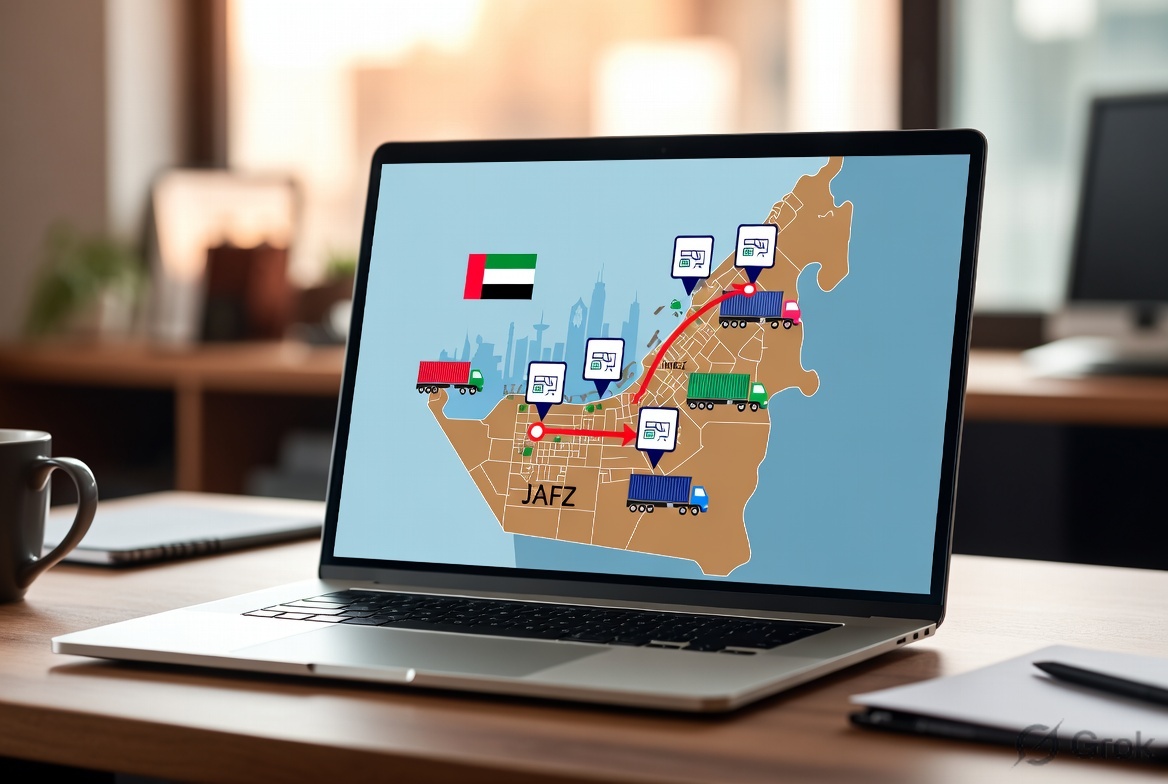
Free zone to mainland transfers are among the most time-consuming declarations for UAE clearing agents to prepare — not because the filing process is complex, but because no two scenarios are quite the same. The documentation requirements, applicable duties, and declaration flow vary depending on which free zone the goods are moving from, the transfer type, the origin of the goods, and the commodity category.
An agent who handles JAFZA-to-mainland transfers daily still has to think carefully when a DAFZA or DIFC transfer comes through. The fields are the same. The logic behind them changes.
This is where preparation time gets consumed — not in Mirsal 2, but in identifying the correct scenario before opening it.
UAE Free Zones and How They Connect to Mainland Customs
The UAE has over 45 free zones, each operating under its own authority with specific regulations governing how goods move between the free zone and the UAE mainland. For clearing agents, the most frequently handled free zones in the Dubai context are:
- JAFZA (Jebel Ali Free Zone) — Operated by DP World, adjacent to Jebel Ali Port. The largest free zone in the UAE by trade volume, handling a significant proportion of UAE re-export and import activity.
- DAFZA (Dubai Airport Free Zone) — High-value goods, electronics, pharmaceuticals, and perishables moving through Dubai International Airport.
- DIFC (Dubai International Financial Centre) — Primarily financial services, but relevant for clearing agents handling imports for DIFC-based entities.
- Dubai South Free Zone — Cargo and logistics-focused, connected to Al Maktoum International Airport and the Expo logistics ecosystem.
- Dubai Multi Commodities Centre (DMCC) — Precious metals, diamonds, commodities.
Each free zone has its own portal or interface with Dubai Customs. Goods moving from any free zone to the UAE mainland are treated as an import from a customs perspective — duties apply, and a Mirsal 2 declaration is required.
Why Free Zone to Mainland Transfers Vary by Scenario
The variation that clearing agents encounter comes from the interaction of several factors that each shift the correct declaration approach:
Transfer Type
The purpose of the mainland transfer affects which declaration type is used and what documentation is required:
- Local sale to mainland buyer — Goods manufactured or processed in the free zone, or goods stored in the free zone and sold to a UAE mainland entity
- Temporary admission — Goods entering the mainland temporarily for processing, exhibition, or repair, with the expectation of return to the free zone
- Re-export to mainland then onward — Goods transiting through the mainland to a third destination
- Consumption in the mainland — Goods imported into the free zone for use or incorporation in mainland operations
Country of Origin
The origin of goods moving from a free zone to the mainland determines the applicable duty rate and whether preferential rates under GCC common external tariff or bilateral trade agreements apply. Goods manufactured within the free zone may qualify for different treatment than goods that were simply warehoused there. Origin documentation — and its alignment with the declaration — is a consistent source of errors in free zone transfer declarations.
Commodity Category
Certain commodity categories have additional requirements for mainland entry regardless of their free zone origin:
- Food and agricultural products — health certificates, municipality approvals
- Pharmaceuticals and medical devices — Ministry of Health registration
- Electronics — Emirates Authority for Standardisation and Metrology (ESMA) conformity
- Controlled substances — relevant ministry NOC
A clearing agent who knows which commodity is moving can identify the required permits before the declaration is started. One who discovers a missing permit after submission faces a query and a delay.
Free Zone-Specific Documentation Requirements
Each free zone authority may require its own gate pass, transfer approval, or internal documentation before goods can be released for mainland transfer. For JAFZA, the DP World portal is the interface. For DAFZA, the free zone authority issues its own transfer documentation. These internal documents must accompany the Mirsal 2 declaration. Missing or mismatched free zone documentation is a frequent cause of queries on free zone transfer declarations.
The Standard Documentation Set for a Free Zone to Mainland Transfer
While documentation varies by scenario, a typical JAFZA-to-mainland transfer requires:
- Commercial invoice — Seller (free zone entity) to buyer (mainland entity), showing the transaction value and goods description
- Packing list — Matching the invoice for weight, quantity, and description
- Free zone gate pass or transfer approval — Issued by the relevant free zone authority confirming goods release
- Certificate of origin — Where applicable for duty preference or origin-sensitive commodities
- Import permit or NOC — Where required for the specific commodity category
- HS code classification — 12-digit code as per UAE tariff, determining the applicable duty rate for mainland entry
For other free zones, the gate pass equivalent is issued by a different authority and may require a different document format. This is where the scenario-specific knowledge of the clearing agent matters — and where agents handling unfamiliar free zones slow down to check requirements they cannot rely on memory for.
Where Preparation Time Goes on Free Zone Transfer Declarations
For clearing operations that handle high volumes of free zone to mainland transfers, the time cost sits in three places:
Scenario Identification
Before data extraction can begin, the agent must determine the correct declaration type, applicable duty framework, and required documentation set for the specific combination of free zone, transfer type, origin, and commodity. This is cognitive work that cannot be templated and that requires the agent to engage with each shipment individually.
Document Completeness Check
Free zone transfer documents arrive from multiple sources — the free zone authority, the shipper, the logistics provider, the importer. Assembling the complete set and verifying that all documents are present and consistent before declaration preparation begins takes time that is difficult to compress without a systematic intake process.
Cross-Document Consistency Across Higher-Complexity Document Sets
A standard import declaration involves three primary documents. A free zone transfer declaration may involve five or six, each from a different issuing party. The number of potential inconsistencies increases correspondingly. Value mismatches between the commercial invoice and the customs value. Description differences between the gate pass and the packing list. Origin declarations that do not align with the certificate of origin.
Each inconsistency that reaches Mirsal 2 risks a rejection. HS code errors alone add 2 to 5 days to clearance time. For free zone transfers where the mainland buyer is waiting on goods for operational use, these delays have direct business consequences.
The complexity is not in filing. It’s in identifying the right scenario before you file.
How Clearing Agents Are Reducing Free Zone Transfer Processing Time
The approach that reduces free zone transfer processing time most consistently is moving the scenario identification and document completeness check from the end of the intake process to the beginning.
In practice, this means:
- Scenario detection at intake — When documents arrive, the free zone origin, transfer type, and commodity category are identified immediately, triggering the correct documentation checklist for that specific scenario
- Completeness check before data extraction — Missing documents are identified and requested from the relevant party before the agent begins any data work, rather than during or after preparation
- Cross-document validation before Mirsal entry — All documents in the set are checked for consistency before a single field is entered into the Dubai Trade Portal
Document intelligence tools that can detect free zone origin, classify document types on receipt, and run scenario-appropriate completeness checks reduce the cognitive load on the clearing agent at the intake stage — freeing their attention for the judgment-based elements of the declaration that require experience.
Where Nunar Supports Free Zone Transfer Declarations
Nunar’s document intake and extraction capability handles the multi-document complexity of free zone to mainland transfers. Documents arriving from the free zone authority, the shipper, and the logistics provider are classified on receipt, extracted into structured fields, and validated against each other before the agent begins Mirsal 2 preparation.
For scenarios involving unfamiliar free zones or commodity categories, the structured output from Nunar gives the agent a consistent starting point — extracted data with flagged inconsistencies — rather than raw documents requiring full manual review. The scenario knowledge and declaration judgment remain with the agent. The manual extraction and cross-document checking are handled in the preparation layer.
Summary: Free Zone to Mainland Customs Clearance in UAE
- Free zone to mainland transfers are treated as imports by Dubai Customs — Mirsal 2 declaration and applicable duties apply
- Documentation requirements and declaration approach vary by free zone, transfer type, country of origin, and commodity category — there is no single standard flow
- The primary time cost is scenario identification and document completeness verification, not the Mirsal 2 entry itself
- Missing permits, origin document inconsistencies, and free zone gate pass mismatches are common rejection causes on free zone transfer declarations
- Systematic document intake and cross-document validation before declaration preparation reduces the risk of errors that require amendment after submission
Frequently Asked Questions
Do goods moving from a UAE free zone to the mainland require a customs declaration?
Yes. Goods moving from any UAE free zone to the mainland are treated as an import from a Dubai Customs perspective. A Mirsal 2 declaration through the Dubai Trade Portal is required, applicable customs duties are assessed, and all relevant documentation must be provided.
What duties apply to free zone to mainland transfers in UAE?
Standard GCC common customs tariff rates apply to goods entering the mainland from a UAE free zone. The applicable rate depends on the HS code classification of the goods. Goods manufactured within the free zone may qualify for preferential treatment under certain conditions. Origin documentation must support any preferential rate claimed.
What is the difference between JAFZA and DAFZA for customs purposes?
Both JAFZA and DAFZA are Dubai free zones requiring Mirsal 2 declarations for mainland transfers, but they operate under different authorities. JAFZA is operated by DP World and connected to Jebel Ali Port. DAFZA is operated by the Dubai Airport Free Zone Authority and connected to Dubai International Airport. Each issues its own transfer documentation, and the interface processes for goods release differ between them.
How long does a free zone to mainland customs transfer take in Dubai?
For well-prepared declarations with complete documentation and accurate HS codes, free zone to mainland transfers follow the standard Dubai Customs channel assignment — green channel for automatic release, yellow for document review within hours, red for physical inspection adding 1 to 3 business days. Declarations requiring amendment after submission due to document inconsistencies or HS code errors add 2 to 5 days.
What documents are needed for a free zone to mainland transfer?
The standard set includes a commercial invoice, packing list, free zone gate pass or transfer approval from the relevant free zone authority, and where applicable a certificate of origin, import permit, and HS code documentation. The specific requirements vary by free zone, commodity category, and transfer type — a clearing agent familiar with the applicable scenario identifies the required documentation set before beginning declaration preparation.
Key Statistics
- The UAE has over 45 free zones, each with its own authority and documentation requirements for mainland transfers
- Dubai Customs processes approximately 63,000 declarations daily — free zone transfer declarations form a significant proportion of this volume given Dubai’s position as a re-export hub
- The UAE recorded AED 5.23 trillion in total trade in 2024, with free zone activity accounting for a substantial share of import and re-export flows
- HS code errors on free zone transfer declarations add 2 to 5 days to clearance — compounding the scenario-complexity cost that already makes these declarations more time-intensive than standard imports
- Declaration amendments carry a fine of AED 500, waived under the January 2026 Dubai Customs initiative for sea cargo with pre-arrival submission and 72-hour amendment completion
Further Reading
- What Is Mirsal 2? A Guide for UAE Clearing Agents and Freight Forwarders
- Why Dubai Customs Declarations Get Rejected — and What UAE Clearing Agents Can Do
- HS Code Classification for Dubai Customs: Manual Lookup vs AI-Assisted
- How to Automate Dubai Trade Portal Entries: Step-by-Step for UAE Clearing Agents
- Dubai Trade & Customs Clearance Automation — Nunar for UAE Clearing Agents