
Benefits of Automated Invoice Processing
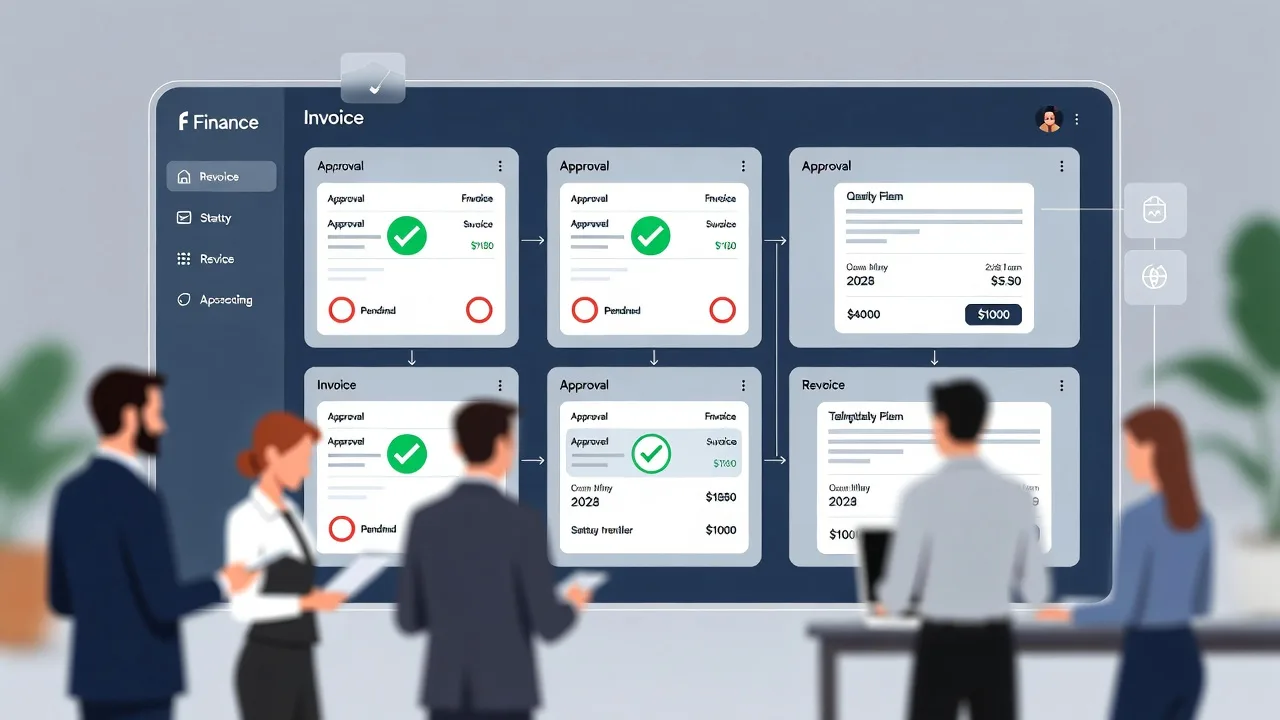
Benefits of Automated Invoice Processing for Enterprises Managing Complex Logistics and Transportation Operations
Automated invoice processing uses technology like AI and OCR to handle the receipt, validation, and payment of bills with minimal human intervention. Transitioning from manual methods offers significant strategic and operational gains:
1. Massive Cost Savings
- Direct Reductions: Automation can cut processing costs by up to 80%, dropping the average cost per invoice from $15–$40 (manual) down to just $2–$5.
- Discount Capture: Accelerated approval cycles allow businesses to consistently capture early payment discounts (typically 1–3%) and avoid late fees (averaging 1.5% per month).
- Paperless Operations: Eliminates expenses related to printing, mailing, and physical document storage.
2. Speed and Efficiency
- Rapid Turnaround: Automated workflows can reduce invoice cycle times from weeks to just a few days, or even minutes.
- Increased Throughput: Teams with automation can process 64% more invoices per month per employee compared to those using manual methods.
- Seamless Approvals: Invoices are automatically routed to the correct stakeholders with digital reminders, preventing them from being “lost” in email chains or on desks.
3. Improved Accuracy and Compliance
- Error Prevention: AI and OCR achieve over 98% data accuracy, virtually eliminating typos, mis-keyed figures, and duplicate entries.
- Fraud Detection: Automated “three-way matching” cross-references invoices against purchase orders and receipts to flag anomalies and prevent fraudulent payments.
- Audit Readiness: Systems maintain a complete, timestamped audit trail of every action, making regulatory compliance (e.g., SOX, GDPR) easier to demonstrate.
4. Strategic Financial Control
- Real-Time Visibility: Finance leaders gain instant access to dashboards showing pending liabilities and spending patterns by vendor or department.
- Better Cash Flow Management: Proactive tracking of due dates allows for more accurate cash flow forecasting and smarter liquidity planning.
- Scalability: Automated systems can handle sudden spikes in invoice volume without requiring additional headcount, allowing the business to grow efficiently.
5. Enhanced Relationships
- Supplier Trust: Reliable, on-time payments foster stronger trust with vendors, often leading to better terms or priority service.
- Employee Morale: Automating repetitive, mundane data entry frees staff to focus on high-value strategic work, which can improve job satisfaction and retention.
Logistics invoices are structurally different from standard vendor bills. They are data-heavy, exception-prone, and deeply tied to operational events.
A single shipment can generate:
- Carrier freight invoices
- Fuel and toll charges
- Detention and demurrage fees
- Third-party warehouse bills
- Customs and compliance documents
Most enterprises still process these invoices using a mix of email, PDFs, spreadsheets, and ERP workflows designed for simpler procurement models. The result is predictable.
| Challenge Area | Impact on Enterprise Operations |
|---|---|
| Manual data entry | High error rates across line items and accessorial charges |
| Delayed approvals | Missed early payment discounts and strained carrier relationships |
| Poor matching | Disputes between invoices, contracts, and shipment data |
| Limited visibility | No real-time view of AP liabilities by route, carrier, or region |
| Audit exposure | Weak traceability across invoices, shipments, and approvals |
Automated invoice processing directly addresses these structural failures rather than just speeding up the same broken workflow.
How Automated Invoice Processing Actually Works in a Logistics Context?
At an enterprise level, automation is not about scanning invoices faster. It is about orchestrating data, rules, and decisions across systems.
Modern automated invoice processing platforms, especially those powered by AI agents, typically handle the following stages.
| Stage | What Automation Replaces | Enterprise Benefit |
|---|---|---|
| Invoice ingestion | Manual email sorting and uploads | Centralized intake across EDI, PDFs, portals |
| Data extraction | Human keying of line items | High-accuracy capture of freight-specific fields |
| Validation | Spreadsheet-based checks | Automated rule enforcement against contracts |
| Matching | Manual 2-way or 3-way matching | Real-time matching with TMS, WMS, and ERP data |
| Approval routing | Email and follow-ups | Policy-driven, auditable workflows |
| Posting and payment | Manual ERP entry | Faster close cycles and predictable cash flow |
For logistics enterprises, the real value comes from AI agents that understand shipment context, not just invoice formats.
Reducing Cost Leakage Through Automated Invoice Processing
One of the most tangible benefits of automated invoice processing is the elimination of silent cost leakage.
In logistics, overbilling is rarely malicious. It is usually the result of:
- Incorrect fuel surcharge calculations
- Duplicate invoices
- Charges outside contracted rate cards
- Unapproved accessorials
Manual teams catch some of these issues. They never catch all of them.
| Cost Leakage Source | Manual AP Reality | Automated Invoice Processing Outcome |
|---|---|---|
| Duplicate invoices | Often missed across vendors | Automatically flagged and blocked |
| Rate mismatches | Spotted only in audits | Validated in real time |
| Unauthorized charges | Discovered post-payment | Prevented before approval |
| Missed discounts | Common at scale | Systematically captured |
Enterprises processing tens or hundreds of thousands of invoices annually often see measurable savings within the first quarter of automation.
Accelerating Invoice Cycle Time Without Sacrificing Control
Speed alone is not the goal for enterprise finance teams. Predictability is.
Automated invoice processing shortens cycle times while maintaining strict governance.
| Metric | Manual Processing | Automated Invoice Processing |
|---|---|---|
| Average processing time | 10–25 days | 2–5 days |
| Exception resolution | Ad hoc and slow | Rule-driven and prioritized |
| Approval bottlenecks | People-dependent | Policy and SLA-based |
| Month-end close impact | High | Significantly reduced |
In logistics-heavy enterprises, faster cycles also mean stronger carrier relationships. Carriers prioritize shippers who pay accurately and on time.
Improving Audit Readiness and Compliance Across Global Operations
Regulatory and audit requirements grow more complex as logistics enterprises expand across regions.
Automated invoice processing creates a clean, traceable audit trail by default.
| Compliance Area | Manual Risk | Automated Safeguard |
|---|---|---|
| Approval evidence | Emails and screenshots | System-logged workflows |
| Policy enforcement | Inconsistent | Embedded business rules |
| Document retention | Fragmented | Centralized and searchable |
| Audit preparation | Reactive | Always-on readiness |
For enterprises operating across borders, automation also simplifies compliance with tax regimes, customs documentation, and regional accounting standards.
Gaining Real-Time Visibility Into Logistics Spend
Manual invoice processing turns spend analysis into a backward-looking exercise. By the time data is clean, the decisions are already made.
Automated invoice processing changes that dynamic.
Enterprises gain:
- Real-time visibility into freight and transportation costs
- Spend breakdowns by carrier, route, mode, and region
- Early warning signals for cost anomalies
| Insight Type | Manual Reporting | Automated Intelligence |
|---|---|---|
| Freight spend trends | Monthly or quarterly | Near real time |
| Carrier performance | Anecdotal | Data-backed |
| Cost anomalies | Discovered late | Flagged immediately |
| Forecast accuracy | Low | Continuously improving |
When AI agents sit on top of this data, finance teams move from reporting to proactive cost control.
Scaling Accounts Payable Without Scaling Headcount
Logistics volumes rarely grow in neat, linear ways. Peaks, disruptions, and expansion plans put pressure on AP teams.
Automated invoice processing allows enterprises to scale operations without adding proportional headcount.
| Growth Scenario | Manual AP Outcome | Automated AP Outcome |
|---|---|---|
| New carriers onboarded | Training-heavy | Rule-based onboarding |
| Volume spikes | Backlogs | Elastic processing |
| M&A activity | Integration delays | Faster system alignment |
| Geographic expansion | Local process drift | Centralized governance |
This is especially critical for transportation enterprises operating in volatile markets.
Why AI Agents Matter More Than Basic Invoice Automation?
Many enterprises already use some form of invoice automation. The gap appears when complexity increases.
AI agents go beyond static rules.
They can:
- Learn from historical invoice disputes
- Understand shipment context from TMS data
- Adapt validation logic as contracts change
- Proactively surface risk patterns
| Capability | Traditional Automation | AI Agent–Driven Processing |
|---|---|---|
| Rule handling | Fixed | Adaptive |
| Exception management | Reactive | Predictive |
| Cross-system context | Limited | Deep integration |
| Continuous improvement | Manual tuning | Self-learning models |
For logistics and transportation enterprises, AI agents turn invoice processing into a strategic function rather than a cost center.
Enterprise Considerations When Adopting Automated Invoice Processing
Not all automation platforms are built for logistics-scale complexity. Enterprise buyers should evaluate solutions against operational reality.
Key questions to ask:
| Evaluation Area | What Enterprises Should Look For |
|---|---|
| Logistics data support | Native understanding of freight charges |
| System integration | ERP, TMS, WMS compatibility |
| AI transparency | Explainable decisions for audits |
| Security and controls | Enterprise-grade access and compliance |
| Scalability | Proven performance at high volumes |
The right platform aligns finance, operations, and procurement rather than optimizing AP in isolation.
The Strategic Payoff of Automated Invoice Processing
For enterprises in logistics and transportation, invoice automation is no longer just about efficiency. It is about resilience.
When disruptions hit, whether fuel price shocks, port congestion, or demand swings, enterprises with automated invoice processing respond faster because their financial data is trustworthy and current.
That is the difference between reacting late and steering proactively.
Final Thoughts
The benefits of automated invoice processing extend far beyond accounts payable efficiency. For logistics and transportation enterprises, it becomes a foundation for financial accuracy, operational intelligence, and scalable growth.
As AI agents take on more of the cognitive load, invoice processing stops being a bottleneck and starts becoming a source of competitive advantage.
People Also Ask
Automated invoice processing reduces processing time, lowers error rates, prevents overpayments, improves compliance, and provides real-time visibility into spend. For logistics enterprises, it also improves carrier relationships and cost control.
Advanced platforms use AI to extract and validate logistics-specific data such as fuel surcharges, accessorial fees, and shipment references, matching invoices against contracts and transportation management systems.
Yes. Enterprise-grade solutions are designed to integrate with ERPs like SAP and Oracle, as well as TMS and WMS platforms, ensuring end-to-end data consistency.
Modern solutions include role-based access, audit trails, encryption, and compliance with financial and data protection standards, making them suitable for regulated enterprise environments.
Most enterprises see measurable ROI within three to six months through reduced labor costs, prevented overpayments, and improved cash flow management.